เพื่อใช้ในงานคัดเลือกแบบช่วยด้วยโมเลกุล (marker-assisted selection, MAS) งานวิจัยนี้เป็นวิทยานิพนธ์ระดับปริญญาโทของนิสิต โดยได้รับการเผยแพร่ผลงานวิจัยในระดับนานาชาติ เรื่อง Characterization of a novel Ty-2a intragenic allele for marker development in tomato yellow leaf curl virus resistance breeding programs of tomato กับวารสาร Asia-Pacific Journal of Science and Technology ในปี 2024
Abstract
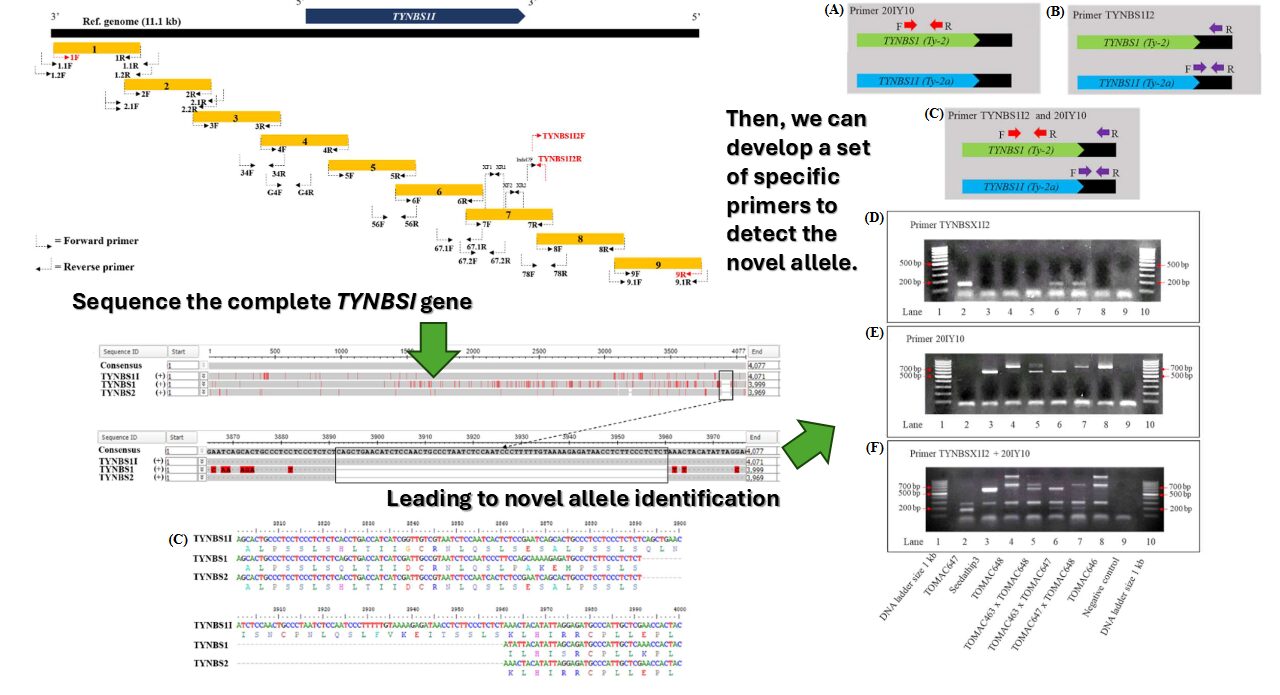
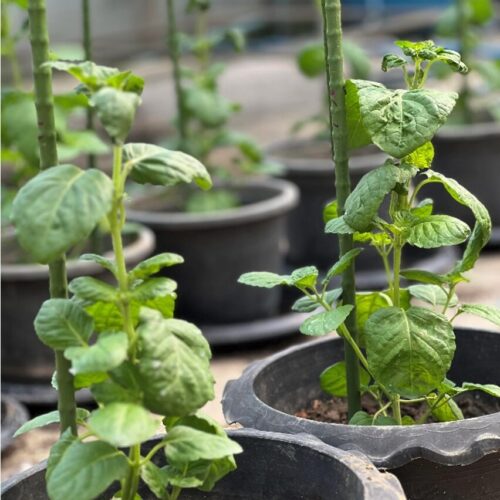
One of the most severe diseases for tomato plantations in Thai farming is the Tomato Yellow Leaf Curl Virus (TYLCV) that has challenged breeders to introduce resistance to the crop for decades. Several TYLCV resistance genes have been confirmed, such as Ty-1, Ty-2, and Ty-3, of which Ty-2 is the most common target in TYLCV resistance breeding. The gene is located on chromosome 11 as TYNBS1, encoding CC-NB-LRR proteins classified in the R gene family. A co-segregating T0302 marker has been used for tracing the Ty-2 resistance allele. The marker illustrates three polymerase chain reaction (PCR) product fragments, classified as 800 bp, 900 bp, and 830 bp and representing the ty-2 susceptible, Ty-2 resistance, and Ty-2a resistance alleles, respectively. A novel intragenic resistance allele has now been demonstrated in Solanum habrochaites ‘L06112’ Clone No.1. DNA flanking the homozygous Ty-2a TYNBS1 region in the Solanum lycopersicum TOMAC647 tomato line was compared with related genes in the family, resulting in the recognition of a conserved domain. The Ty-2a and Ty-2 alleles were not significant for TYLCV resistance ability. We proposed TYNBS1I as the novel allele, showing 94% identify with TYNBS1 in Ty-2. Furthermore, we designed DNA markers which detect the DNA sequence at the gene terminal and 3’ downstream of TYNBS1I that were not in TYNBS1, with 164 bp of the PCR product only present on tomato lines that contained Ty-2a, allowing us to use these markers in TYLCV resistance programs.